Body areas and associated conditions
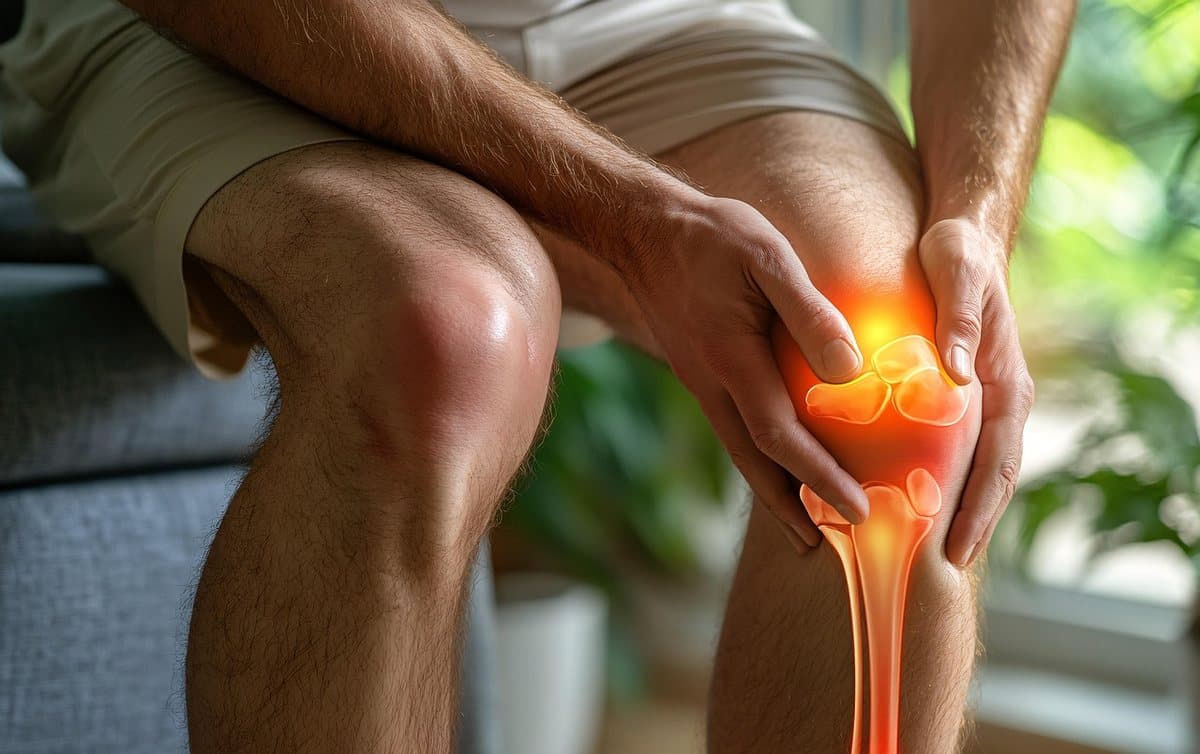
Knee osteoarthritis
Pain and stiffness that come on gradually. We explain what's happening inside your knee and what you can do to move better again.
Más información
Chondromalacia patellae
Pain at the front of the knee when going downstairs, crouching or sitting for a long time. We explain why it happens and how it's resolved.
Más información
Patellar tendinitis
Pain just below the kneecap when jumping, running, climbing stairs or crouching. We explain why it happens and why releasing the quadriceps isn't enough.
Más información
Quadriceps tendinitis
Pain just above the kneecap after exertion or overload. It resolves quickly if treated in time: we explain how.
Más información
Meniscus injury
Sharp pain when twisting or crouching, and sometimes a feeling that the knee locks. We explain the difference between impingement and a tear, and how they're treated.
Más información
Cruciate ligament tear
Partial or complete tear of the anterior or posterior cruciate, with or without surgery. We explain what happens inside the knee and how stability is regained.
Más información
Collateral ligament injury
Pain on the inner or outer side of the knee after a knock or an awkward movement. We explain why it's almost never operated on and why it's best not to stay still.
Más información
Iliotibial band syndrome
Pain on the outer side of the knee when running or going downhill. We explain why the problem is almost never in the band itself, but in the hip.
Más información
Pes anserine tendinitis
Pain on the inner side of the knee, slightly below the joint. It usually comes from overload and resolves quickly if treated properly.
Más información
Baker's cyst
A lump behind the knee that hurts when you bend or straighten it. We explain why it appears, why it tends to come back and what we can do about it.
Más información
Low back pain
Pain and stiffness in the lower back, sometimes to the point of locking you up. We explain why it happens and why it usually resolves quickly.
Más información
Sciatica
Pain that travels from the back or buttock down the leg. We explain why it isn't always a trapped nerve and how we find the real cause.
Más información
Lumbar disc herniation
When the disc presses on the nerve and the pain travels down the leg. We explain why most aren't operated on and how we work to stop it coming back.
Más información
Sacroiliac pain (joint block)
Pain in the lower back and buttock, on one side, that sometimes travels down the leg. It's usually resolved in a single session: we explain why.
Más información
Piriformis syndrome (false sciatica)
Pain in the buttock that can travel down the leg and gets worse when sitting. We explain why it's called "false sciatica" and how we resolve it.
Más información
Sacroiliitis
Inflammation of the sacroiliac joint that causes pain in the buttocks and lower back, especially in the early hours and when getting up. We explain how to recognise it and how we help you.
Más información
Neck pain (cervicalgia)
Pain and stiffness in the neck that rises to the back of the head or spreads down to the shoulders. We explain why it happens, why it comes back and how we treat it so it doesn't return.
Más información
Cervical disc herniation
Neck pain that travels down the arm, with tingling or loss of strength in the hand. We explain what it is and how we treat it, whether or not you have surgery.
Más información
Wry neck (torticollis)
Your neck suddenly locks and you can't turn your head. We explain why it happens and how we resolve it, usually in a single session.
Más información
Whiplash
Neck pain and stiffness after an accident or sudden braking, sometimes days later. We explain why it's best to treat it early and how we do it.
Más información
Tension headache from the neck
A headache that squeezes like a band or starts at the back of the neck. We explain when it comes from neck tension and how we treat it.
Más información
Cervicogenic dizziness
Dizziness, unsteadiness or a drunk-like feeling that comes from the neck. We explain how to tell whether it comes from the neck or the inner ear, with tests you can do at home.
Más información
Jaw tension, bruxism and TMJ
Do you clench your teeth, does your jaw hurt or click when you open your mouth? We explain why it happens and how we treat it in a much more bearable way.
Más información
Upper back pain (between the shoulder blades)
Pain, burning or a fixed spot between the shoulder blades that gets worse after hours of sitting. We explain why it happens and how we treat it.
Más información
Blocked rib (pain when breathing)
Sharp back pain that increases when you breathe deeply, cough or turn. We explain why a rib gets blocked and how we unblock it.
Más información
Scoliosis, hyperkyphosis and hyperlordosis
A rounded back, an exaggerated lower back curve or sideways curves. We explain what they are and how we rebalance the muscles to correct your posture as far as possible.
Más información
Supraspinatus tendinitis and tear
Supraspinatus tendinitis is the most common shoulder tendinitis: it hurts when raising your arm to the side, getting dressed or sleeping on that side. If it isn't treated, the tendon wears and can tear. We explain how to recognise it, how we treat it and what to do if there's already a tear.
Más información
Rotator cuff tendinitis
The rotator cuff is made up of four tendons, and tendinitis can affect just one or several. We explain how to tell which one hurts with simple tests, why it ends up affecting the whole shoulder and how we treat it.
Más información
Shoulder impingement (subacromial syndrome)
Shoulder impingement is the supraspinatus tendon and the bursa rubbing against the acromion when you raise your arm. We explain how to recognise it with simple tests, what the subacromial bursitis that often comes with it is and how we treat it.
Más información
Biceps tendinitis (long head)
Biceps tendinitis causes pain at the front of the shoulder when bending your elbow forcefully or carrying weight. We explain how to recognise it with a simple test, why it so often appears alongside other shoulder injuries and how we treat it.
Más información
Frozen shoulder (adhesive capsulitis)
In a frozen shoulder, the joint capsule contracts and the shoulder becomes more and more blocked. We explain how to tell it apart from tendinitis, why there have been more cases since the pandemic and how we treat it to get rid of the pain and recover movement.
Más información
Thoracic outlet syndrome
Thoracic outlet syndrome appears when the nerves running from the neck to the arm get compressed between the neck muscles, the collarbone and the chest. We explain how to recognise it, how it differs from a cervical disc herniation and how we treat it.
Más información
Hip osteoarthritis (coxarthrosis)
Hip osteoarthritis causes pain in the groin, stiffness and difficulty with movements as simple as putting on your socks. We explain why the muscles are the key to the pain, how we treat it and how we support you if you need a hip replacement.
Más información
Trochanteritis (trochanteric bursitis)
Trochanteritis causes pain on the outer side of the hip, especially when lying on your side or climbing stairs. We explain how to recognise it, why the origin may be in the glutes and even in the foot, and how we treat it.
Más información
Pubalgia and adductor tendinitis
Pubalgia is one of the most common pains in athletes, and in most cases it's due to adductor tendinitis. We explain how to recognise it, how we treat it and what the return to sport is like, step by step.
Más información
Hip impingement (femoroacetabular impingement)
With hip impingement, the femur and pelvis collide when you bend and rotate your hip, and pain appears in the groin. We explain why having this shape on an X-ray isn't always a problem, how we treat it and when surgery is considered.
Más información
Snapping hip (hip clicking)
Snapping hip is that click you feel on the outer side of your hip or in your groin when moving your leg. We explain why it happens, how to tell which type you have, when it needs treating and how we do it.
Más información
Medial epicondylitis (golfer's elbow)
Medial epicondylitis, also called golfer's elbow or elbow tendinitis, causes pain on the inner side of the elbow when gripping, carrying weight or bending the wrist. We explain why it appears, how to check for it at home and how we treat it at Mitra Salud.
Más información
Lateral epicondylitis (tennis elbow)
Lateral epicondylitis, also called tennis elbow or elbow tendinitis, causes pain on the outer side of the elbow when gripping objects or turning the wrist. We explain why it appears, how to check for it at home and how we treat it at Mitra Salud.
Más información
Distal biceps tendinitis (pain at the front of the elbow)
Distal biceps tendinitis causes pain at the front of the elbow when lifting weight with your arm bent or turning your palm up. We explain why it appears, how to check for it at home and how we treat it at Mitra Salud.
Más información
Distal biceps tear (rehabilitation after surgery)
A distal biceps tear happens when the biceps tendon comes away, completely or partially, from its attachment in front of the elbow. We explain how to recognise it, what to do and how we help you recover, before and after surgery.
Más información
Carpal tunnel syndrome
Carpal tunnel syndrome causes tingling, numbness and pain in the thumb, index and middle fingers, especially at night. We explain why it appears, how to check for it at home and how we treat it at Mitra Salud.
Más información
De Quervain's tenosynovitis (thumb tendinitis)
De Quervain's tenosynovitis causes pain in the wrist, on the thumb side, when gripping, lifting weight or moving your thumb. It's very common in new mums and dads. We explain why it appears, how to check for it at home and how we treat it at Mitra Salud.
Más información
Trigger finger
Trigger finger makes a finger catch when you bend it and suddenly release with a snap when you straighten it. We explain why it happens, how to recognise it and how we treat it at Mitra Salud.
Más información
Rhizarthrosis (thumb osteoarthritis)
Rhizarthrosis is osteoarthritis at the base of the thumb. It causes pain when pinching, opening jars or turning keys, and over time loss of strength. We explain why it appears, how to check for it at home and how we treat it at Mitra Salud.
Más información
Wrist sprain
A wrist sprain is an injury to the ligaments, almost always after a fall onto your hand. We explain how to recognise it, when a fracture needs ruling out and how we treat it at Mitra Salud.
Más información
Guyon's canal syndrome (tingling in the little finger)
Guyon's canal syndrome causes tingling and numbness in the little and ring fingers due to compression of the ulnar nerve at the wrist. It's very common in cyclists. We explain why it appears, how to tell it apart from other causes and how we treat it at Mitra Salud.
Más información
Rib fracture (broken or cracked rib)
A broken or cracked rib hurts when you breathe, cough or move, and takes a few weeks to heal. We explain what to do, when to see a doctor and how we help you recover your muscles and breathing so there are no lasting effects.
Más información
Muscle tear (torn muscle)
A muscle tear is when some of a muscle's fibres break, almost always during a sprint, a jump or a sudden movement. We explain how to recognise it, what to do in the first few days and how we treat it at Mitra Salud so it heals well and doesn't happen again.
Más información
Muscle knots and overload (tight muscles)
A muscle knot is a muscle that stays tense and hard, with a painful spot that won't loosen. It can appear from a sustained posture, an effort without preparation or stress. We explain why it appears, how to tell it apart from a tear and how we treat it at Mitra Salud.
Más información